Watercolor Garden Clipart: A Summer Embroidery Review
As a professional embroidery designer and product reviewer, I approach every new digital asset with a healthy dose of skepticism. The market is flooded with beautiful screen images that fail spectacularly once needle hits fabric. When evaluating Watercolor Garden Clipart, Summer Garden, my primary concern is not just how pretty the illustration looks on a monitor, but how it translates into a tangible, stitchable reality for commercial and personal projects. This collection falls under the category of Illustrations, which often presents unique challenges for machine embroidery due to the complex color blending and soft edges inherent in watercolor art. After reviewing this specific set, I have found it to be a promising candidate for summer collections, provided you understand its technical behavior.
First Impressions and Visual Mood
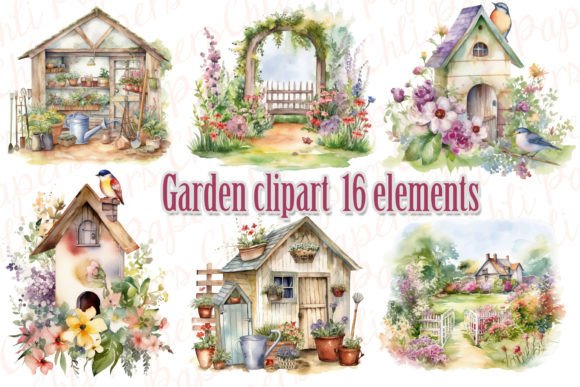
The immediate appeal of Watercolor Garden Clipart, Summer Garden lies in its organic fluidity. Unlike rigid vector art or cartoonish clipart, these designs possess a softness that mimics traditional painting. For an embroidery business owner or Etsy seller, this aesthetic is currently in high demand. Customers are moving away from overly dense, plastic-looking embroidery and seeking designs that feel artisanal and delicate. The layout of these floral elements suggests movement rather than static placement, making them ideal for wrapping around seams, cascading down a placket, or framing a monogram without looking boxed in.
However, as a reviewer, I must note that "watercolor" in a digital embroidery file usually implies one of two things: either a highly sophisticated blend of fill stitches and running stitches to simulate shading, or a design intended specifically for applique or sublimation combined with embroidery. Before purchasing or stitching, you must verify if this is a pure machine embroidery design or a hybrid digital asset. If it is purely stitched, expect a higher stitch count to achieve those gradients. If it relies on printed fabric or applique, your material choices will dictate the final quality.
Real-World Application: The Linen Tote Bag Test
To truly evaluate the viability of Watercolor Garden Clipart, Summer Garden, I mentally prototyped a custom embroidered tote bag made from medium-weight natural linen. Linen is a textured fabric that can sometimes fight against fine details, yet it is the quintessential backdrop for summer garden themes. In this scenario, the design serves as more than just decoration; it acts as the primary value driver for the finished product.
For a tote bag design, scale is everything. These illustrations appear balanced enough to be enlarged for a center chest placement on a sweatshirt or scaled down for a pocket accent on an apron. In my assessment, the Summer Garden theme works exceptionally well for personalized gifts like bridal party totes or boutique merchandise. The visual personality is romantic yet durable, avoiding the overly cutesy vibe that can alienate adult buyers. When stitched on linen, the slight texture of the fabric actually enhances the watercolor effect, breaking up the sheen of the rayon or polyester thread to create a more matte, painterly finish. This synergy between digital embroidery file and fabric texture is what separates professional results from amateur attempts.
Technical Considerations for Apparel and Delicate Fabrics
While the aesthetic is strong, practical application requires caution. Watercolor-style embroidery files often utilize varying stitch densities to create depth. This creates specific risks when applied to stretchy fabrics like jersey knits used in t-shirts and baby clothes. If the stitch density is too high in the shaded areas, you risk fabric puckering or needle damage. Conversely, if the density is too low to accommodate the stretch, the design may gap or distort after washing.
When planning sweatshirt embroidery or baby embroidery using this clipart, stabilizer choice becomes non-negotiable. For knit fabrics, I recommend testing with a cut-away stabilizer rather than tear-away to support the variable tension of watercolor-style fills. Additionally, consider the hoop size relative to the design dimensions. Crowding a complex floral illustration into the smallest possible hoop increases tension issues. Always leave adequate margin space within the hoop to maintain consistent thread tension across the entire motif.
Dark fabrics present another challenge. Watercolor designs typically rely on light-to-medium thread colors to show gradient transitions. Stitching these directly onto navy or black garments without a white underlay or base layer will result in muddy, invisible details. If your small shop product line includes dark apparel, verify that the embroidery file includes proper underlay settings or plan to add a white base layer manually during digitizing.
Elevating Product Value and Brand Consistency
For creative entrepreneurs and handmade shop owners, consistency builds trust. Using Watercolor Garden Clipart, Summer Garden allows for cohesive branding across multiple product categories. Imagine offering a matching set: a nursery pillow cover featuring a large central bloom, a coordinating baby bib with a smaller bud, and a mama’s cap with a subtle side accent. This versatility transforms a single digital purchase into an entire seasonal collection.
The professional presentation of these designs also impacts buyer engagement. High-quality watercolor embroidery photographs beautifully because the texture catches light differently than flat satin stitch columns. When creating printable mockups or listing photos for Etsy, the dimensional quality of the stitched flowers adds perceived value. Customers recognize the difference between a generic stock design and a thoughtful, artistically rendered embroidery project. However, this only holds true if the execution is flawless. Loose top threads, poor registration between color layers, or inadequate coverage will immediately undermine the premium feel of the watercolor aesthetic.
Critical Designer Notes Before You Stitch
Based on my review of similar assets in this niche, here are my practical directives for using Watercolor Garden Clipart, Summer Garden successfully:
- Test on Scrap Fabric First: Never run a new watercolor design directly on a finished garment. The complexity of simulated shading requires verification. Test on the exact fabric and stabilizer combination you intend to use for the final product.
- Audit Thread Color Contrast: Watercolor effects depend on subtle color shifts. Ensure your thread palette has distinct variation between shades. Using three shades of pink that look identical in dim lighting will flatten the design and ruin the illusion.
- Check Licensing for Commercial Use: As an Etsy seller or craft business owner, confirm whether this digital embroidery file permits use on finished products sold commercially versus digital resale. Protect your business by understanding the terms before listing items.
- Evaluate Small Details: Inspect the file for tiny running stitch elements. On textured fabrics like canvas or burlap, minute details can get lost or cause excessive needle penetrations. You may need to edit out micro-details for certain applications.
- Mockup in Black and White: Before committing to thread colors, view the design in grayscale. This reveals whether the contrast levels are sufficient to define petals and leaves without relying solely on hue differences.
- Verify Hoop Compatibility: Do not assume the design fits your machine’s maximum area. Measure the actual stitch field required and compare it against your hoop specifications to avoid mid-design errors.
Final Verdict for Makers
Watercolor Garden Clipart, Summer Garden represents a valuable asset for makers focusing on soft, feminine, and nature-inspired aesthetics. It bridges the gap between digital art and textile craft effectively, provided the user respects the technical demands of translating paint-like visuals into thread. Whether you are creating holiday embroidery for Mother’s Day, updating your summer inventory, or designing a personalized gift for a gardener, this collection offers significant potential. Success lies not just in the beauty of the illustration, but in your willingness to test, stabilize, and adapt the design to honor both the artwork and the fabric it adorns. Treat this digital asset as a collaboration between the original artist and your embroidery machine, and the resulting finished product will undoubtedly resonate with customers who appreciate true craftsmanship.