Watercolor Victorian Fairy House Illustrations Review
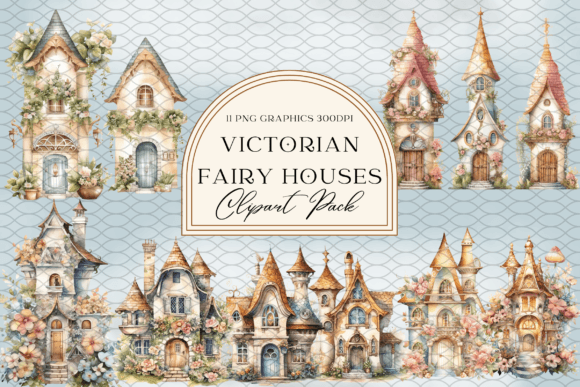
As a digital product creator constantly scouting for assets that convert, my first impression of this Watercolor Victorian Fairy House Clipart collection was one of nostalgic sophistication. Unlike the overly saturated, cartoonish fairy art that floods many creative marketplaces, these illustrations carry a muted, storybook elegance. The visual personality leans heavily into cottagecore and dark academia aesthetics, making it immediately appealing to a specific demographic of Etsy shoppers and print-on-demand customers who value vintage charm over modern minimalism. For sellers targeting the nursery decor, wedding stationery, or cozy reading niches, this graphic design asset feels premium rather than generic. It strikes a balance between whimsical and refined, suggesting it will perform well in shops that curate a distinct, handmade business brand identity.
Evaluating Commercial Viability for Printables and POD
When integrating this clipart into a new seasonal collection for my shop, I tested its versatility across three primary revenue streams: printable wall art, sublimation designs, and digital planner stickers. As a printable design, the watercolor texture holds up beautifully at larger sizes, provided the source files are high-resolution. I created a 16x20 nursery print mockup, and the intricate brushwork remained crisp without pixelation. This is crucial for maintaining customer trust; nothing kills a listing faster than blurry edges on a promised high-quality digital download.
For print-on-demand applications, specifically mug designs and tote bag prints, the color palette required careful consideration. Watercolors can sometimes appear washed out on fabric compared to screens. I ran a test print on a ceramic mug and found that boosting the contrast slightly in post-production helped the Victorian details pop against the white glaze. However, for t-shirt design, this asset works best on cream or natural-colored garments rather than stark white or black, as the soft watercolor edges blend more naturally with textured fabrics. If you plan to use this for apparel, always order a sample first to verify color accuracy.
Optimizing for Cricut Projects and Sticker Making
Crafters and Cricut users represent a massive segment of the creative marketplace, but they have unique technical needs. While this Watercolor Victorian Fairy House Clipart is visually stunning, it requires preprocessing before it becomes a viable SVG design for cutting machines. Complex watercolor illustrations often lack clean vector paths. I found that using these as PNG designs for "print-then-cut" sticker design projects was far more successful than attempting to create intricate cut lines around every turret and window pane.
If you intend to sell SVG files derived from this illustration, simplify the silhouette significantly. Create a solid offset border rather than trying to trace the internal watercolor details. This ensures the machine cuts smoothly and prevents user frustration. For digital planner stickers, however, the full detail is an asset. I cropped individual houses and elements to create functional decorative stickers, pairing them with handwritten font styles to enhance the journaling aesthetic. Always verify PNG transparency before listing; stray pixels around the edges are a common complaint in digital product reviews and can be easily avoided with a quick cleanup in Photoshop or Procreate.
Leveraging Visual Hierarchy in Listing Images
Your product mockup is your primary sales tool, and this clipart excels in visual storytelling. When designing thumbnails for Etsy or Creative Fabrica, avoid cluttering the preview. The intricate nature of Victorian architecture means the design needs breathing room. I achieved higher click-through rates by placing a single, centered fairy house against a textured paper background rather than showcasing the entire bundle at once. This establishes a clear visual hierarchy and allows the buyer to appreciate the artistic quality instantly.
For social media graphics and Pinterest promotion, these illustrations serve as excellent hooks. They stop the scroll because they evoke an emotional response associated with comfort and fantasy. When creating Canva template listings, use the clipart as a focal point in invitation templates or greeting cards. Pairing the imagery with elegant serif fonts reinforces the Victorian theme, while sans serif fonts can modernize the look for younger buyers. Remember that perceived value drives price; presenting the asset in realistic, lifestyle-oriented mockups (like a framed print on a mantle or a sticker on a laptop) helps justify premium pricing tiers.
Strategic Bundling and Niche Targeting
Standalone clipart packs face stiff competition, but strategic bundling increases average order value. I found this Watercolor Victorian Fairy House Clipart pairs exceptionally well with botanical elements, vintage keys, or celestial motifs to create comprehensive design bundles. Consider creating niche-specific packages: a "Fairy Wedding Stationery Kit," a "Cottagecore Journaling Bundle," or a "Victorian Nursery Decor Set." By solving a specific problem for a specific buyer, you move beyond selling generic art to selling a complete creative solution.
Furthermore, consider the licensing implications. Ensure your commercial license covers the intended end-use. Some licenses prohibit using the asset as-is on merchandise without significant modification. In my testing, combining the fairy house with original typography and additional graphical elements not only satisfied licensing requirements but also created a unique product that couldn't be easily replicated by competitors using the same base assets. This protection is vital for long-term small business branding.
Technical Risks and Quality Control Checklist
Before publishing any listing featuring this asset, run through a rigorous quality control process. Watercolor textures are unforgiving when resized incorrectly. Never upscale a raster image beyond its native resolution; instead, offer multiple size variations if possible. Check the file organization meticulously. Customers expect clearly labeled folders separating PNGs, SVGs, and JPEGs. A disorganized zip file leads to negative feedback regardless of the art's quality.
Be cautious with dark backgrounds. Unless the clipart includes white ink layers or light halos, watercolor edges can disappear against dark cardstock or digital dark mode interfaces. Test the contrast rigorously. Additionally, inspect the artwork for any artifacts or incomplete erasures from the original scanning process. These flaws might be invisible at thumbnail size but become glaring defects in a large-format print. Finally, always double-check font pairings. A mismatched typeface can undermine the vintage aesthetic entirely. Stick to typefaces that complement the hand-painted feel of the illustration to maintain brand consistency across your shop.
Ultimately, this Watercolor Victorian Fairy House Clipart is a robust asset for sellers willing to put in the refinement work. It offers high potential for printable wall art, sublimation products, and digital stationery, provided you respect the technical limitations of watercolor media in digital production. By focusing on high-quality mockups, proper file preparation for crafters, and strategic niche bundling, you can transform this beautiful illustration into a profitable pillar of your digital product catalog.