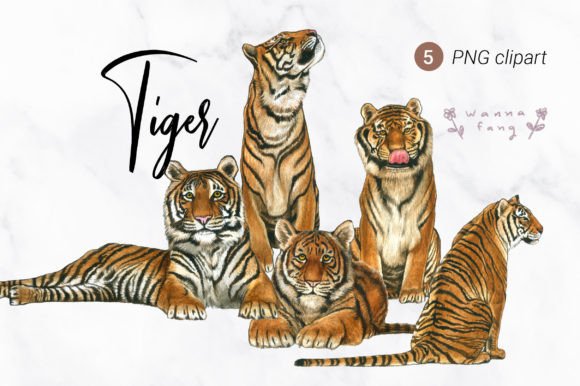
Tiger Watercolor Animal Clipart, PNG: Illustrations for Branding
When evaluating a new graphic design asset for a client project, my first question is always about emotional resonance. Does this visual communicate the brand’s soul before a single word is read? Upon reviewing the Tiger Watercolor Animal Clipart, PNG, the immediate impression is one of organic warmth blended with spirited energy. Unlike rigid vector art or overly cartoonish clipart, this watercolor style carries a tactile, handmade quality that feels both premium and approachable. The soft edges and fluid pigment bleeds suggest an artisanal touch, making it exceptionally well-suited for businesses that want to project authenticity rather than corporate sterility.
For a recent branding project involving a boutique children’s skincare line, this specific illustration served as the perfect anchor. The tiger motif strikes a delicate balance; it is bold enough to capture attention on a crowded shelf yet rendered softly enough to feel safe and nurturing for a young demographic. This duality is rare in commercial design assets. It avoids the aggressive connotations often associated with big cats while retaining a sense of wild, natural beauty. For local business owners, handmade sellers, and creative entrepreneurs, this asset signals a brand personality that is playful, earthy, and meticulously crafted.
Elevating Product Packaging and Label Hierarchy
In practical application, the Tiger Watercolor Animal Clipart, PNG shines brightest within packaging design and product label layouts. During the mockup phase for the skincare project, we tested this illustration against various container shapes and label sizes. The transparency of the PNG format proved invaluable, allowing the tiger to nestle seamlessly into curved bottle labels without awkward white boxes disrupting the visual flow. This is critical for small business branding where professional polish builds customer trust.
The asset functions effectively as a secondary brand element rather than a primary logo. In our case, we used it to create a visual hierarchy on the front of the packaging. The typography remained clean and legible for regulatory compliance, while the tiger illustration provided the emotional hook at the top third of the label. This separation ensures that marketing visuals remain effective without sacrificing clarity. For food businesses, bakeries, or candle brands, this clipart can serve as a flavor indicator, a seasonal marker, or a mascot that ties together a diverse product range. It transforms a generic container into a storytelling vessel, enhancing shelf appeal and encouraging that crucial second glance from potential customers.
Versatility Across Print and Digital Touchpoints
A strong brand identity requires consistency across multiple platforms, and this graphic design asset offers remarkable adaptability. Beyond physical packaging, we integrated the tiger into thank-you cards and printable inserts included with orders. The watercolor texture prints beautifully on uncoated, textured paper stocks, reinforcing the handmade business aesthetic. When scaled down for stickers or hang tags, the details hold up reasonably well, though designers must be mindful of minimum size requirements to prevent muddiness in the brushwork.
On the digital front, the asset transitions effortlessly to social media graphics and web design. We utilized it as a decorative corner element in Instagram templates and as a hero graphic for email newsletters. Because watercolor inherently possesses a transparent, airy quality, it does not overwhelm text-heavy promotional ads or menu graphics. For marketers and social media managers, this means the Tiger Watercolor Animal Clipart, PNG can be layered over solid colors or subtle gradients without competing with call-to-action buttons or sale announcements. It adds character to Canva templates and digital products, elevating them from generic layouts to bespoke brand experiences.
Strategic Placement and Design Constraints
While versatile, this illustration demands strategic placement. It works best as a supportive visual accent rather than the sole focal point in complex layouts. I recommend using it for hero graphics, seasonal campaign visuals, and boutique storefront signage where there is ample negative space. However, caution is necessary when applying it to formal corporate branding or luxury minimalist brands that rely on stark precision. The organic imperfections of watercolor may clash with rigid grid systems or high-tech aesthetics.
Furthermore, avoid placing this asset in areas dense with legal information, ingredient lists, or barcodes. The intricate brush strokes can reduce legibility if placed directly behind small text. Similarly, on very small labels or crowded product packaging, the detail may get lost during the printing process. Always prioritize visual hierarchy; the illustration should guide the eye, not obstruct essential data. For editorial design or content-heavy flyers, use the tiger as a margin element or background texture at low opacity to maintain readability while adding thematic depth.
Technical Evaluation and Pre-Press Checklist
Before committing this asset to a final print run or commercial launch, experienced designers must perform rigorous technical validation. First, verify the resolution. While PNG designs are convenient, ensure the file is at least 300 DPI at the intended print size to avoid pixelation on product packaging. Test the transparency mask carefully; sometimes watercolor edges have semi-transparent pixels that look fine on screen but print as gray halos on dark backgrounds. Always preview the asset in CMYK color mode to check for color shifts, as vibrant digital blues and oranges can dull significantly in ink.
Typography pairing is another critical test. We found that the Tiger Watercolor Animal Clipart, PNG pairs beautifully with modern serif fonts and organic handwritten scripts, creating a cohesive artisanal vibe. Conversely, it can clash with geometric sans serifs or ultra-bold display fonts unless balanced with significant whitespace. Create a product mockup using your actual brand colors to ensure the illustration harmonizes rather than fights with your palette. If you require infinite scalability for large-format banners or vehicle wraps, consider whether an SVG design version is available or if the PNG resolution suffices.
Finally, and most importantly, confirm the commercial license. Using design assets from a creative marketplace requires due diligence. Ensure the licensing terms cover physical product sales, especially if you are selling items featuring the artwork as a primary value proposition. For local business projects, having clear commercial usage rights protects both the designer and the client from future legal complications. When vetted correctly, this tiger illustration becomes more than just a pretty picture; it becomes a reliable, legally sound component of a professional branding toolkit that drives recognition and sales.
Ultimately, the Tiger Watercolor Animal Clipart, PNG represents a valuable resource for creative entrepreneurs seeking to infuse their brand with warmth and narrative. By treating it as a strategic design element rather than mere decoration, small business owners can leverage its artistic charm to build stronger emotional connections with their audience. Whether applied to a jar of honey, a baby onesie tag, or a seasonal social media campaign, its success lies in thoughtful integration, technical precision, and respect for the overall brand ecosystem. When used with intention, it transforms standard commercial design into something memorable, trustworthy, and distinctly human.